VA Termite Inspection in Florida: Rules & Who Pays
Updated July 2026
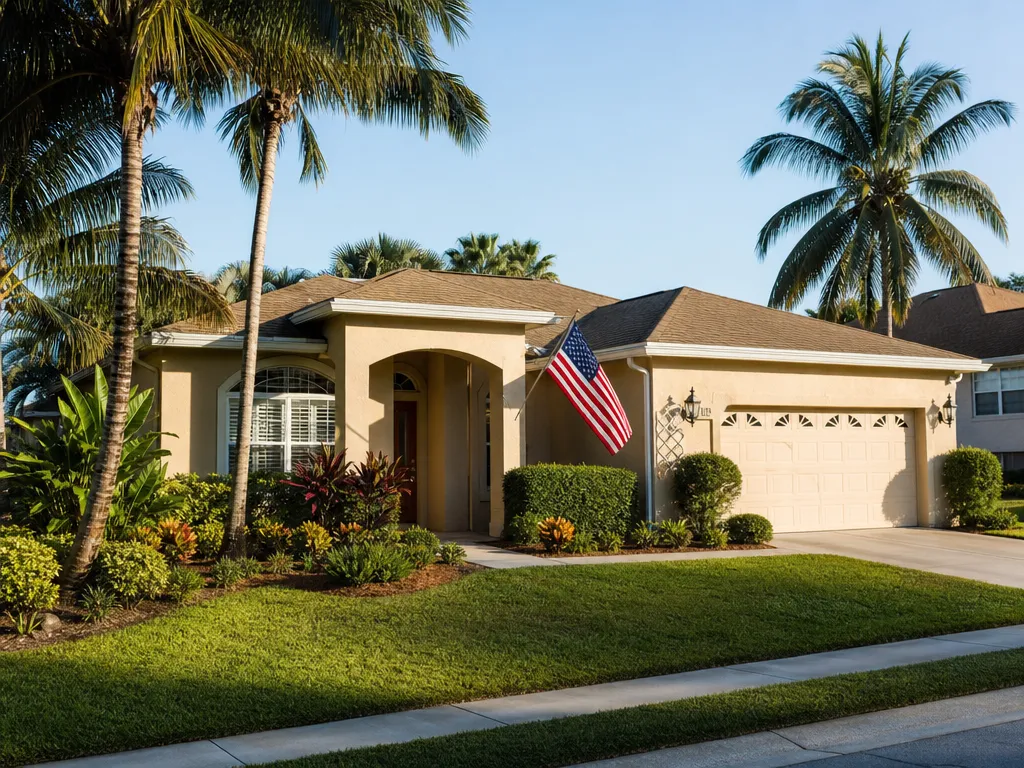
If you are buying a Florida home with a VA loan, plan on a termite inspection: the VA lists Florida among the states where wood-destroying insect information is required for the entire state, so the appraisal’s Notice of Value (NOV) will carry that condition on essentially every purchase. In Florida the report arrives on the state’s own WDO form (FDACS-13645), and — a genuine rule change many older articles still miss — since VA Circular 26-22-11 the veteran is allowed to pay for the inspection. The report needs to be recent (lenders treat 90 days as the shelf life), and any live infestation or unrepaired damage must be cleared before the loan can close.
Why Every Florida VA Purchase Triggers a WDO Inspection
Florida sits squarely inside the VA’s mandatory termite territory. The VA’s Local Requirements page states that “only states requiring a wood-destroying insect inspection are included” on its list — and Florida is on it, statewide, alongside most of the South. The policy logic comes from VA Circular 26-22-11: VA requires a wood-destroying pest inspection report, as a Minimum Property Requirement (MPR), for properties in areas where the Termite Infestation Probability Map shows “very heavy” or “moderate to heavy” probability — a description that covers Florida top to bottom.
Mechanically, the requirement flows through the appraisal: the VA appraiser’s Notice of Value is conditioned on wood-destroying insect information, and the lender cannot close until a satisfactory report is in the file. How this fits alongside FHA, conventional, and cash deals is mapped out in our requirements guide.
Which Form: FDACS-13645, With NPMA-33 in the Background
Nationally, the termite form lenders know is the NPMA-33 Wood Destroying Insect Inspection Report, which states on its face that it “is approved for FHA and VA loans” (sample on hud.gov). Florida, however, prescribes its own instrument: under s. 482.226, Florida Statutes, any inspection for wood-destroying organisms performed for a real estate transaction must be reported on Form FDACS-13645 by a company licensed for termite and WDO work. So in Florida, your VA termite inspection is, in practice, a Form 13645 WDO inspection, and lenders accept the state form; if your lender’s checklist also names the NPMA-33, Florida inspectors handle that routinely — ask for both at ordering time.
| NPMA-33 | FDACS-13645 | |
|---|---|---|
| What it is | National wood-destroying insect report, published through HUD | Florida’s state-prescribed wood-destroying organism report |
| Where it applies | FHA and VA loan files nationwide (“approved for FHA and VA loans”) | Every Florida real-estate WDO inspection, by statute |
| What it covers | Termites, carpenter ants, carpenter bees, reinfesting wood-boring beetles — “does not include mold, mildew or noninsect wood destroying organisms” | All wood-destroying organisms, including wood-decaying fungi (rot) |
| Validity | Self-invalidates for mortgage purposes after 90 days | No set period in state law; lenders apply the 90-day convention |
The scope row is the one that matters. Florida’s form covers organisms, which state guidance confirms includes wood-decaying fungi — so in a humid state where wood rot is a routine finding, Florida’s broader form works in the buyer’s favor: fungal damage that a pure insect report could stay silent on shows up in a 13645. What each section of that form means is unpacked in our WDO report guide.
Who Orders It — and Who Is Allowed to Pay
Ordering is simple: once the NOV carries the condition, the buyer’s side — usually the agent, sometimes the lender’s processor — schedules a licensed WDO company. Paying used to be the complicated part. For years, VA rules barred the veteran from paying the termite inspection fee in most states, so the fee landed on the seller by default.
That changed on June 15, 2022. Circular 26-22-11, “Pest Inspection Fees and Repair Costs,” authorizes in advance, as a local variance, “that Veterans may be charged wood destroying pest inspection fees, where required by the NOV,” and adds that “Veterans may also pay for any repairs required to ensure compliance with MPRs.” Two practical footnotes from the same document: veterans “are encouraged to negotiate the cost of the wood destroying pest inspection and repairs with the seller,” and an itemized invoice identifying the veteran and the property must support the charge on the Closing Disclosure. The circular is “valid until rescinded,” and as of July 2026 the VA’s circulars index shows no later circular modifying it — the policy stands.
Translation for a Florida deal: the fee is negotiable like any other line item. Sellers in competitive listings still absorb it; in a buyer-side rush to closing, the veteran can simply pay and keep the file moving. The inspection itself is one of the smaller numbers on the deal — typically well under $200 — and our cost guide breaks down what Florida companies charge for it.
The 90-Day Window
The NPMA-33 carries the rule in its own fine print: the report “shall be considered invalid for purposes of securing a mortgage and/or settlement of property transfer if not used within ninety (90) days from the date of inspection” — and, as the form itself warns, that is a validity window, not a 90-day warranty. Florida’s Form 13645 is different in an unexpected way: FDACS guidance states the report “is not required to be guaranteed by the licensee nor is it required to be good for any set period of time” — it certifies the property’s condition on the inspection date, period.
In practice, lenders and the VA apply the 90-day convention to Florida files regardless of which form is in the package. The workable strategy: order the WDO inspection after your general inspection period shakes out but comfortably inside 90 days of the target closing date, and if closing slips past the window, budget for a re-inspection rather than argue about it.
If the Inspection Finds Something
Findings do not kill a VA deal; unresolved findings do. Circular 26-22-11 states the operating rule: MPR repairs identified on a wood-destroying pest inspection report “must be completed prior to guaranty.” The sequence in Florida looks like this:
- The 13645 documents live activity, evidence, or damage, with locations.
- A licensed company treats the covered organisms; Florida law requires the treatment notice to be posted at the structure and, when treatment happens at inspection time, the WDO contract to be attached to the report.
- Damage that rises to an MPR issue — rot-compromised framing, chewed structural members — gets repaired, by agreement between the parties.
- The lender gets the documentation (and, where required, a re-inspection or clear follow-up report) and clears the NOV condition.
Who pays for treatment and repairs is negotiation, not regulation — the circular explicitly allows the veteran to pay and explicitly encourages negotiating with the seller. One Florida nuance worth knowing early: drywood termite findings can point to tent fumigation, which adds scheduling time — build it into the closing timeline. If the report shows previous treatment instead, that is a different situation entirely, and often a good one: ask whether an active termite bond stands behind it, and see our Florida termite bond guide for how transfers work.
New Construction: Builder Termite Paperwork Instead of a Resale Report
Buying a to-be-built or under-construction home changes the paperwork, not the principle. For proposed and under-construction properties in areas where wood-destroying insect information is required — all of Florida — VA has directed program participants to use two HUD forms: NPMA-99-A, the Subterranean Termite Protection Builder’s Guaranty, completed and certified by the builder, and NPMA-99-B, the New Construction Subterranean Termite Service Record, completed by the licensed pest control company that performed the treatment and attached to the 99-A. That instruction comes from VA Circular 26-17-07, which framed it as a “continued requirement”; the circular itself lapsed on its routine January 1, 2020 rescission date, so confirm current handling with your lender — but the forms remain the standard HUD builder-guarantee paperwork, and Florida builders’ pretreatment records typically arrive on exactly these documents. On a true new build, this builder documentation — not a resale-style Form 13645 inspection — is what satisfies the termite condition.
Refinances: IRRRL vs. Cash-Out
An Interest Rate Reduction Refinance Loan (IRRRL, the VA streamline) normally requires no new appraisal and therefore generates no NOV termite condition — no WDO inspection, in the typical case. A VA cash-out refinance is the opposite: it runs on a full appraisal, so in Florida the wood-destroying insect requirement applies just as it does on a purchase. Individual lenders can layer their own requirements on either product, so confirm before you assume.
Checklist for Florida Veteran Buyers
- Confirm early that your timeline includes a WDO inspection — in Florida it is coming on every purchase.
- Use a company licensed by FDACS for termite and WDO work; the inspector must hold a state WDO identification card or operator certification.
- Ask for Form 13645, plus the NPMA-33 if your lender’s checklist names it.
- Schedule inside 90 days of the expected closing date.
- Get the itemized invoice in your name if you are paying — the Closing Disclosure needs it.
- If the report notes previous treatment, chase the bond paperwork before closing, not after.
- If there are findings, get treatment and repairs documented and into the lender’s file promptly — that is what clears the NOV.
Bottom Line
Florida is mandatory-termite-inspection territory for VA purchases: expect a Form 13645 WDO report, expect the 90-day freshness rule, and know that since Circular 26-22-11 you are allowed to pay for it — or negotiate it away. Findings are a workflow, not a wall: treat, repair, document, close. When you need the inspection done, start with our directory of licensed Florida WDO inspection companies, organized by metro and county.
Frequently Asked Questions
Is a termite inspection required for every VA loan in Florida?
For purchases, yes — VA lists Florida among the states where wood-destroying insect information is required statewide, so the Notice of Value is conditioned on a clear WDO report. Streamline refinances (IRRRLs) normally skip it because no new appraisal is ordered.
Can the veteran pay for the termite inspection in Florida in 2026?
Yes. VA Circular 26-22-11 (June 15, 2022) authorizes veterans to pay wood-destroying pest inspection fees where the NOV requires them, and the circular remains in effect as of July 2026. The fee can also be negotiated to the seller.
How long is the termite inspection good for on a VA loan?
Plan on 90 days. The national NPMA-33 form declares itself invalid for mortgage purposes after 90 days; Florida's Form 13645 has no statutory expiration, so the window is a lender convention — confirm the exact cutoff with your loan team.
What happens if the WDO inspection finds termites?
Active infestation or damage flagged as a Minimum Property Requirement issue must be resolved — licensed treatment and any required repairs, documented — before the loan can close. Veterans are allowed to pay for those repairs and encouraged to negotiate them with the seller.
Sources & review
Facts in this guide are checked against primary sources — benefits.va.gov, hud.gov, leg.state.fl.us, fdacs.gov — linked inline where cited. Last reviewed July 2026. We are an independent directory: no inspection company pays for placement or editorial coverage.
Related Reading
Get a WDO Inspection Quote
Tell us about the property — we’ll connect you with licensed Florida WDO inspection companies for free quotes. No obligation.